

07.08.2026
Open Banking for High-Risk Merchants: Benefits, Limits and Use Cases
If you own a business in a risk-sensitive industry like adult or dating, you know perfectly well that moving money is rarely simple. Whether you run a dating app, a creator platform, or a high-ticket travel site, you likely face the same frustrating hurdles: soaring card transaction costs, unpredictable chargebacks, aggressive rolling reserves, and sudden declined transactions. Even worse than that is the fact that you are always at the mercy of strict provider coverage limitations that can change overnight.

Because of these constant headaches, many operators look for other options. One of the most talked-about solutions right now is Open Banking for high-risk merchants. At its core, this framework offers transactions which operate as a direct account-to-account payments rail.
But let’s be clear from the start: while this technology offers incredible benefits where it is supported, it is not a magic wand. It is not a universal replacement for your card processing, nor does it replace your entire infrastructure. In this guide, we will break down exactly how it works, what benefits it can bring to the table, and what practical limits it comes with.
What Is Open Banking?
To put it simply it is a secure payment processing and regulatory framework that lets consumers share their financial data or pay for things directly from their accounts. Instead of relying on a credit card network to act as the middleman, the transaction happens through secure
APIs (Application Programming Interfaces). Crucially, nothing happens without explicit user consent which proves to bring high user satisfaction and much less frustration for the merchant.
Data sharing vs payment initiation
If you look at the European and UK markets, which are heavily regulated by PSD2 (the revised Payment Services Directive), Open Banking generally does two different things.
First, there are account information services. This allows a business (with the user's permission) to peek at data, like transaction history, to verify identity or check affordability. Second, and more importantly for you as a business owner, there is payment initiation. This allows a regulated third-party provider to tell the customer’s bank to send money directly to your business account.
APIs, regulated providers and user consent
In the early days of fintech, companies used clunky methods like "screen scraping" to access data. Open Banking changes this by using highly secure API integration. This means your business never sees, stores, or touches the customer’s passwords or any sensitive data. Every single action is facilitated by regulated third-party providers, and active user consent is the absolute foundation of the process. If the customer doesn't click "approve," nothing moves.
How Open Banking Payments Work
Adding Open Banking to your checkout will fundamentally change how it operates. It shifts the entire authorisation process away from traditional card networks and hands it directly to the consumer's bank. Below, we explain how these payments work step by step:
- From checkout to authentication
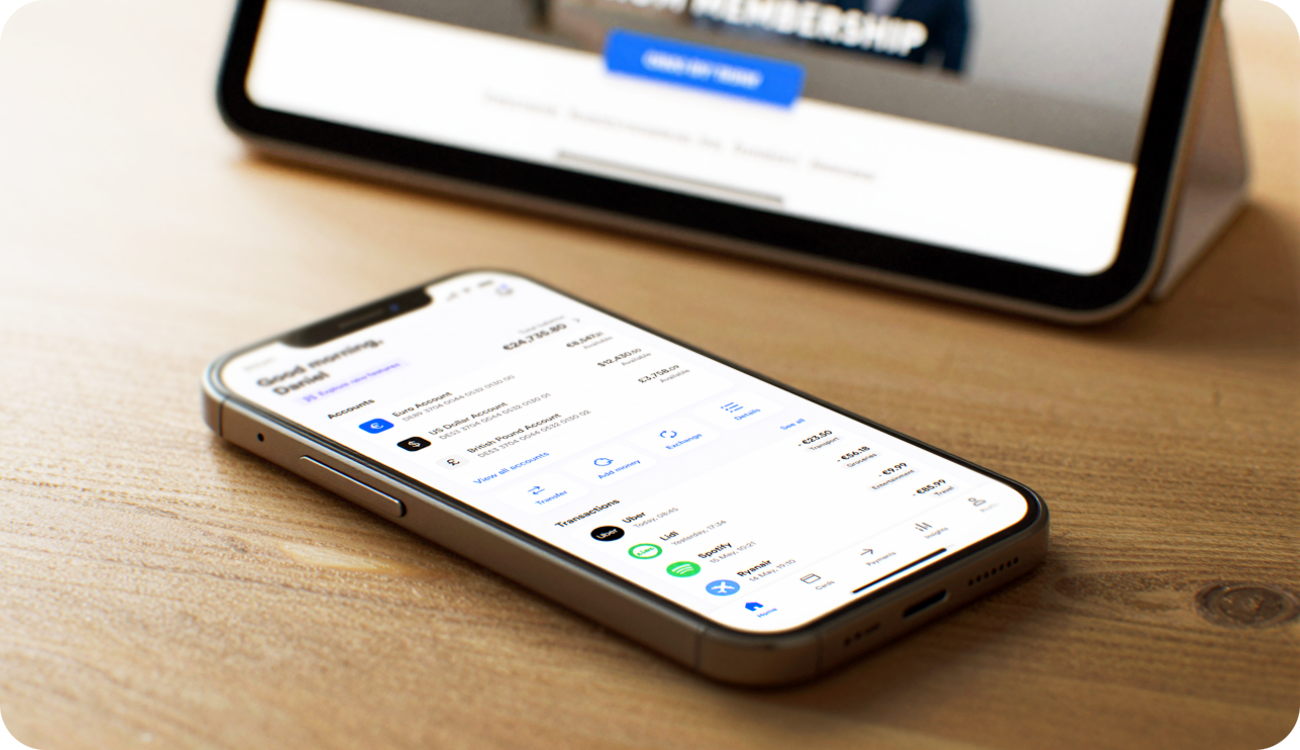
Imagine a user is ready to buy a premium membership on your adult or dating site. At checkout, instead of typing in a 16-digit card number, they select the "Pay by Bank" or a designated Open Banking option. They are shown a list of local institutions and select their own.
Instantly, they are redirected to their own bank’s mobile app or secure online portal. Here, they complete customer authentication using familiar tools like FaceID, fingerprint, or a secure PIN. This creates a highly secure, frictionless checkout experience that the user already trusts because it happens inside their own app. This reduces frictions and frustrations that adult businesses face so frequently – friendly fraud, customer dissatisfaction, and disputes over misunderstood subscription terms and conditions. If the user confirms something within the app, they know what they are buying in an instant, as opposed to seeing a difficult-to-recognise descriptor later on in their statement.
2. Account-to-account payments and confirmation
Once the user authenticates, the payment is officially authorised. The money moves as direct account-to-account payments from the buyer’s bank to your merchant account. As the merchant, you usually get instant or near-instant confirmation that the transaction has been initiated. This means you can confidently release the digital goods or upgrade the user's account immediately.
3. How Open Banking differs from card payments
The biggest difference between Open Banking and card payments is what goes on behind the scenes. Open Banking transactions completely bypass Visa, Mastercard, and other major card networks. Instead of a card network pulling the funds based on a card number, the transaction acts like a highly automated, instant transfer. However, keep in mind that while the confirmation is fast, the actual settlement of funds into the business bank account you open and the final reconciliation timing will still depend on the specific provider and setup you choose to utilise for your business.
Why High-Risk Merchants Look Beyond Card Payments
If you run a high-risk business, you already know that relying on a single payment method is a recipe for disaster. The traditional financial system simply isn't built to favor complex verticals – but the underwriters’ scrutiny or the blatant rejection of the adult industry by the mainstream financial institutions doesn’t mean that you can’t build a robust online high-risk payment processing infrastructure for your business.
Chargebacks, reserves and settlement delays
Let's talk about the elephant in the room: disputes and chargebacks. For risk-sensitive businesses, chargebacks are the ultimate operational threat. To protect themselves, traditional acquirers enforce rolling reserves, often holding 5% to 10% of your hard-earned revenue for up to six months. On top of that, you face agonising settlement delays. This can choke your cash flow and potentially make it incredibly hard to scale your marketing or pay your affiliates or creators on time.
Card-network dependency and provider restrictions
Traditional payment processing is entirely bound by the rules of the major card networks.If you operate in a specialised niche, and especially if it's high risk, like the adult and dating industry, you are constantly walking on eggshells. A sudden shift in a provider's risk appetite, or a slight change in their internal compliance policies, can lead to frozen funds, blocked accounts, or outright bans that can completely derail your business’ stability and revenue flow.
Why alternative payment methods matter
Because of this fragility, integrating alternative methods is no longer just a nice-to-have – online business owners across all niches see it as a critical survival strategy. By diversifying your payment rails, you ensure that if a card processor suddenly restricts your volume, your business doesn't grind to a halt. You still have a direct line to your customers' accounts.
The Pros and Cons of Open Banking for High-Risk Merchants
Use Cases: Where Open Banking May Help High-Risk Merchants
You might still ask yourself – who actually benefits from implementing Open Banking solutions? Is it only the customer, or will you as the merchant see the real influx or stabilisation of revenue flow? To answer shortly, this really depends on what you sell and where your customers live.
Adult, dating and creator platforms
Open Banking can be incredibly effective as a solution for high-risk adult businesses and dating platforms. For adult platforms, dating platforms, and creator platforms, privacy is everything. This method allows users to pay directly from their account without ever handing their card details over to a platform, providing a highly discrete transaction.
Subscription, travel and high-ticket businesses
If you sell high-value items, like in the travel sector, dodging a 3% to 5% card fee on a massive transaction can save you thousands of dollars a month. What about subscriptions and recurring payments? While cards dominate here, Variable Recurring Payments (VRPs) are slowly making Open Banking a viable alternative for repeat billing in advanced markets like the UK.
Regulated or risk-sensitive industries where supported
For industries like iGaming, forex, and CBD, getting a reliable card processor is half the battle. Where legally permitted and supported by the payment provider, direct account-to-account payments offer a highly stable alternative funding mechanism that won't suddenly vanish because a card network changed its policy.
Open Banking vs Card Payments vs Bank Transfers
To figure out where this fits into your business, let's compare Open Banking side-by-side with other well-known payment methods that adult & dating businesses can use.
Payment flow and user experience
For a returning customer, a saved credit card is still the fastest way to pay. Open Banking usually requires an active authentication step for every single purchase. However, it is leaps and bounds better than asking a customer to manually type in your IBAN for a traditional money transfer.
Fees, disputes and settlement differences
Open Banking transactions usually carry significantly lower flat fees compared to the hefty percentage rates of high-risk card processing. While that eliminates network chargebacks, remember that legitimate customer disputes still happen. You will just have to resolve them through your own customer service team rather than fighting an automated dispute.
Why multiple payment rails may be needed
No single payment method does it all. Smart merchants use a hybrid approach. Keep your payment processing for credit cards active to capture impulse buyers and international traffic, while pushing domestic users toward bank-based methods to save on fees and cut down fraud.

When Open Banking May Not Be the Right Fit
Knowing the immense advantages of Open Banking is one thing, but knowing when to walk away is also crucial. This technology is not perfect and will underperform in specific scenarios.
Weak market coverage or low customer adoption
If your customers are primarily based in regions without mature Open Banking laws (like much of the US or Latin America), provider coverage will be minimal. This means simply that if your customers don't recognise the "Pay by Bank" button, they won't click it.
Card-based subscription needs
If your entire business model revolves around complex, automated subscriptions with cascading free trials, prorated upgrades, and a global user base, stick to cards. The global API infrastructure for automated recurring payments is simply not ready to replace credit cards on a worldwide scale yet.
Reconciliation, refund or compliance complexity
Do you process thousands of tiny micro-transactions a day? Do you issue a lot of legitimate refunds? If so, the manual reconciliation and refund tracking required for direct payments might overwhelm your accounting team unless you have top-tier transaction monitoring and treasury software in place.
Compliance, Security and Data Protection Considerations
Bypassing card networks does not mean bypassing the law. API-driven payments come with strict regulatory responsibilities.
PSD2, SCA and regulated providers
In Europe and the UK, the PSD2 directive is the law of the land. It mandates SCA to ensure payments are authorised securely. As a merchant, you cannot just plug directly into a bank; you must partner with a regulated Payment Initiation Service Provider (PISP) to facilitate the transactions.
Consent, GDPR and data protection
Because you are facilitating access to sensitive financial data, your adherence to data protection laws like GDPR must be flawless. User consent has to be explicitly stated, clearly worded, and easily revocable. If you want your processes to be seamless, you have to practice data minimisation, taking only the exact date needed to complete the payment and nothing else.
Why Open Banking is not a compliance shortcut
Open Banking can never be used to hide from the regulators. Much like other non-traditional payment methods, you must never use it to hide your business’ nature or abandon compliance. Using this method, you are still fully subject to overarching compliance laws, KYC (Know Your Customer), KYB (Know Your Business), and AML (Anti-Money Laundering) checks. The providers will underwrite your business just as strictly as a card acquirer would.
How Open Banking Fits Into High-Risk Payment Infrastructure
Open Banking is a feature, not the whole system – it can never work as the only solution, but be one option in a whole catalogue of payment methods that you provide for your customer’s convenience.
Open Banking as one payment method, not the whole stack
To survive as a high-risk merchant, you need a resilient payment stack. You cannot rely solely on direct transfers any more than you can rely solely on one credit card processor. Your overall financial infrastructure needs to be a safety net of multiple options.
Merchant accounts, gateways and business bank accounts
Even if you process 40% of your volume through APIs, you will still desperately need a dedicated merchant account and a flexible gateway to capture international credit card users. Furthermore, when those Open Banking funds clear, they need a safe place to land. This requires a highly stable business bank account or a dedicated business IBAN that understands your industry.
Piecing together this puzzle is difficult, but you don't have to do it alone. Experts at delicato.io help digital businesses navigate high-risk payment and banking infrastructure guidance. Whether you are searching for resilient business accounts for high-risk businesses to settle your direct API transfers, or you need to secure robust high-risk payment processing to keep your international card volume flowing, understanding how to connect these vital pieces is the key to your long-term stability.

What to Check Before Adding Open Banking
Before you sign a contract with a new API provider, run through this practical three-step checklist for choosing an adult payment processor that actually fits your business.
- Countries, banks and currency coverage
Don't just ask "Do you cover Europe?" Ask them to prove that they connect reliably to the specific banks your customers actually use in your target countries. Ensure their APIs smoothly handle the exact currencies your checkout demands.
2. Supported industries and payment flows
Many mainstream providers flat-out reject high-risk verticals. Make sure your specific niche (whether that's dating, adult, or nutraceuticals) is explicitly allowed in their acceptable use policy. Check if they handle one-time payments easily, or if they have the technical chops to support your recurring workflows.
3. Refunds, disputes, reconciliation and reporting
Ask the hard operational questions. How exactly are refunds mechanically processed on their dashboard? What does their reporting export look like? Ensure your accounting team can easily match incoming bank transfers to individual user IDs so that daily reconciliation doesn't turn into a nightmare.
Common Misconceptions About Open Banking
Because the Open Banking technology is still relatively new, a lot of myths still surround it. However, it is important to understand the following:
It does not replace every payment method
Open Banking is a brilliant supplementary tool, but it will not replace the global reach, user familiarity, and flawless subscription management of traditional credit and debit cards anytime soon.
It does not remove compliance obligations
Going bank-to-bank does not mean you fly under the radar. Regulators still demand strict AML and KYC compliance, and third-party providers will rigorously review your business model before letting you use their APIs.
It does not guarantee better conversion everywhere
While it most definitely decreases the amount of chargebacks, you have to weigh that against user friction. In markets where consumers have never seen a "Pay by Bank" button, the extra step of logging into their bank app might actually cause your conversion rates to dip initially.
Final Checklist: Open Banking Pros and Cons for High-Risk Merchants
Before making a decision, weigh these core realities of Open Banking once again:
If your business is reviewing Open Banking as part of a high-risk payment setup, it can be useful to compare it to card-processing and payment-method requirements together to ensure you build a balanced, unbreakable financial strategy. Specialists at delicato.io can help you assess the needs of your business and tailor a solution that will fit it best.
FAQs
What is Open Banking?
It is a secure framework that lets consumers share their financial data or initiate direct payments through regulated third-party providers using APIs, always requiring explicit user consent.
How do Open Banking payments work?
At checkout, the user selects their bank, is redirected to their own bank’s app to authenticate the transaction, and authorises the funds to move directly to the merchant's account.
Why can Open Banking help high-risk merchants?
It gives merchants an alternative to strict card networks, allowing them to bypass traditional card rails, lower their processing costs, and heavily reduce chargeback risks.
What are the main benefits of Open Banking?
The biggest wins are lower dependence on card networks, a massive reduction in fraudulent chargebacks, faster confirmation, and enhanced security via direct bank authentication.
What are the main drawbacks of Open Banking?
Drawbacks include patchy geographic coverage, potential checkout friction for unfamiliar users, complicated manual refund processes, and an inability to easily replace global card subscriptions.
Does Open Banking replace card payments?
No. It acts as a powerful supplementary rail. You still need cards for international reach, familiar checkout experiences, and managing complex, automated subscription billing.
Can Open Banking reduce chargebacks?
Yes. Because the payment is authenticated directly by the user inside their own bank app, it eliminates standard card network chargebacks and typical "friendly fraud."
Is Open Banking suitable for adult and dating platforms?
Yes, assuming the provider's policy allows it. It offers users a highly secure, discrete way to pay without leaving card details on the platform, lowering dispute ratios.
Is Open Banking available worldwide?
No – it thrives in regions with strict regulatory backing like the UK and the EU (thanks to PSD2) but remains fragmented or entirely unavailable in many global markets.
Does Open Banking remove the need for payment processing?
No. You still need traditional processing, payment gateways, and merchant accounts to serve the massive portion of your audience that prefers, or requires, credit card payments.